
The best Hailuo AI alternatives split by shot: Veo 3.1 for physics and lip-synced dialogue, Kling 3.0 for 4K and motion control, Seedance 2.5 for 30-second takes that hold a face, Wan 3.0 for the lowest cost per second. Vidwip runs Hailuo 3, Hailuo 3 Max and Hailuo 2.3 beside 13 other models, so you can A/B one prompt across vendors before you switch.
The best Hailuo AI alternatives in 2026 are Vidwip, Kling, Seedance 2.5, Veo 3.1, Wan 3.0, Runway and Luma. Each one beats MiniMax’s model on at least one of three jobs: physics-heavy motion, faces that hold up in close-up, and image to video.
Hailuo earned its following on motion that obeys gravity. Water pours, cloth falls and bodies land with weight, which is why it became a default for image-to-video work.
But no single model wins every shot in 2026. Veo 3.1 adds lip-synced dialogue, Kling 3.0 renders 4K, and Seedance 2.5 and Wan 3.0 run single takes up to 30 seconds.
This post compares seven Hailuo AI alternatives on motion realism, resolution and cost per second. Every price was checked on the vendor’s own pricing page on October 18, 2026.
Sora isn’t on the list. OpenAI closed the Sora app on April 26, 2026 and ended its API on September 24, 2026 (The Decoder).
Quick picks: the best Hailuo AI alternatives at a glance
- Vidwip AI Video Generator: Hailuo 3, Hailuo 3 Max and Hailuo 2.3 beside 13 other models, so you can A/B one prompt across vendors on one timeline.
- Kling AI: Kling 4.0 on Kling’s own app, and Kling 3.0 up to 4K for about $0.44 a second on Luma.
- Seedance 2.5: takes up to 30 seconds with sound, and the most reference inputs for holding a face steady.
- Google Veo 3.1: the physics and dialogue pick, free to try with 50 daily Google Flow credits.
- Wan 3.0: the lowest cost per second, about $0.05 to $0.10 at 720p on Wan’s own plans.
- Runway: Gen-4.5 plus Kling 3.0 and Seedance 2.5 on one plan, from $15 a month.
- Luma Dream Machine: a public per-second price for every model, Hailuo’s MiniMax H3 included, from $30 a month.
What Hailuo does well, and where it stops
Hailuo now runs two generations of model, and they’re good at different things. Knowing which one you’re replacing tells you which alternative to test.
MiniMax H3 (Hailuo 3) is the current model. Hailuo’s own create page offers it at up to 2K with 12 reference images, and quotes 60 credits for a 5-second 2K shot.
Hailuo 2.3 is the physics model. It makes 6- or 10-second widescreen shots at 1080p, with no sound and a start frame only.
Hailuo’s plans start at $9.99 a month, but the full plan list sits behind a sign-in. On Luma Plus, MiniMax H3 costs 46 credits a second at 2K, about $0.14.
So the reasons to look elsewhere are specific. You want sound with your physics shot, a take longer than 15 seconds, 4K, lip-synced speech, or a cheaper second of footage.
What to look for in a Hailuo AI alternative
Five things separate these tools for physics, faces and image-to-video work. All five can be checked on the vendors’ own pages.
Motion realism. No vendor publishes a physics benchmark you can compare like for like. Test your own hardest shot, such as a pour, a fall or a collision, on two or three models with the same prompt.
Faces and identity. A face that drifts between shots ruins a sequence. Look for reference images and start-and-end frames, which pin a character’s look from shot to shot.
Image to video. Every tool here animates a still. What differs is whether it also takes an end frame, and how many reference images it accepts.
Resolution. Hailuo 3 renders 2K. Only Kling 3.0 goes higher among these, to 4K on Luma.
Cost per second. Credits hide the real price. Every rate below is the plan’s monthly price divided by its credits, times the model’s published rate.
1. Vidwip AI Video Generator
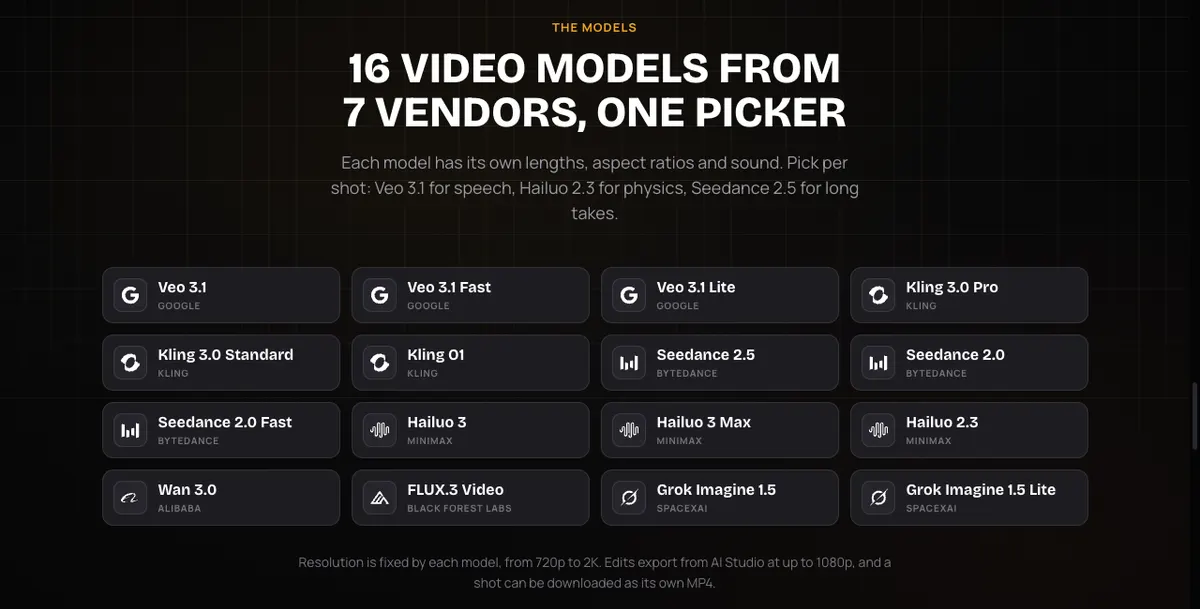 Vidwip AI Video Generator: 16 video models from 7 vendors, three of them Hailuo, in one picker.
Vidwip AI Video Generator is a multi-model AI video generator that runs Hailuo beside its rivals instead of replacing it. The picker holds Hailuo 3, Hailuo 3 Max and Hailuo 2.3, plus 13 more models from Google, Kling, ByteDance, Alibaba, Black Forest Labs and SpaceXAI.
That turns “should I leave Hailuo?” into a test you can run. Write the shot once, generate it on Hailuo 2.3, then run the same prompt on Veo 3.1 or Kling 3.0 Pro and compare the takes on one timeline.
Each Hailuo has its own job. Hailuo 2.3 is the physics pick for anything that falls or pours, Hailuo 3 handles expressive faces in 2K with up to 9 reference images, and Hailuo 3 Max makes quick silent drafts at 768p.
Image to video works on every model. Select a still on your timeline, choose Create video, and it becomes the start frame; 12 of the 16 models also take an end frame.
14 of the 16 models make sound with the picture. The two silent ones are Hailuo 2.3 and Hailuo 3 Max, and the picker says so before you generate.
Every shot lands on the AI Studio timeline, where you trim, sequence and caption it. Projects save, and edits export at up to 1080p with no watermark.
Pros
- Hailuo 3, Hailuo 3 Max and Hailuo 2.3 next to Veo 3.1, Kling 3.0 Pro, Seedance 2.5 and Wan 3.0, 16 models in all
- One credit balance across every model, with each shot’s cost shown before you generate
- A start frame on all 16 models, an end frame on 12, and up to 9 reference images on Hailuo 3
- Filters for Realistic, Sound, Start & end frames, References and Fast
- Every shot lands on an editable timeline, and projects save
Cons
- Kling here means Kling 3.0 Pro, Kling 3.0 Standard and Kling O1, not Kling 4.0
- Kling, Seedance and Wan run at 720p in the picker, and edits export at up to 1080p, so Hailuo 3’s 2K survives only if you download the shot on its own
- One shot per run, with no seed, negative prompt or camera control; you direct the camera in the prompt
Best for: Creators who want to test Hailuo against Kling, Veo and Seedance on the same prompt before committing to one.
Pricing: AI video needs a paid plan. Starter: $25/month ($20 billed yearly) for 2,500 credits. Pro: $99/month ($79 billed yearly) for 10,000 credits. Enterprise: custom (vidwip.com/pricing).
2. Kling AI
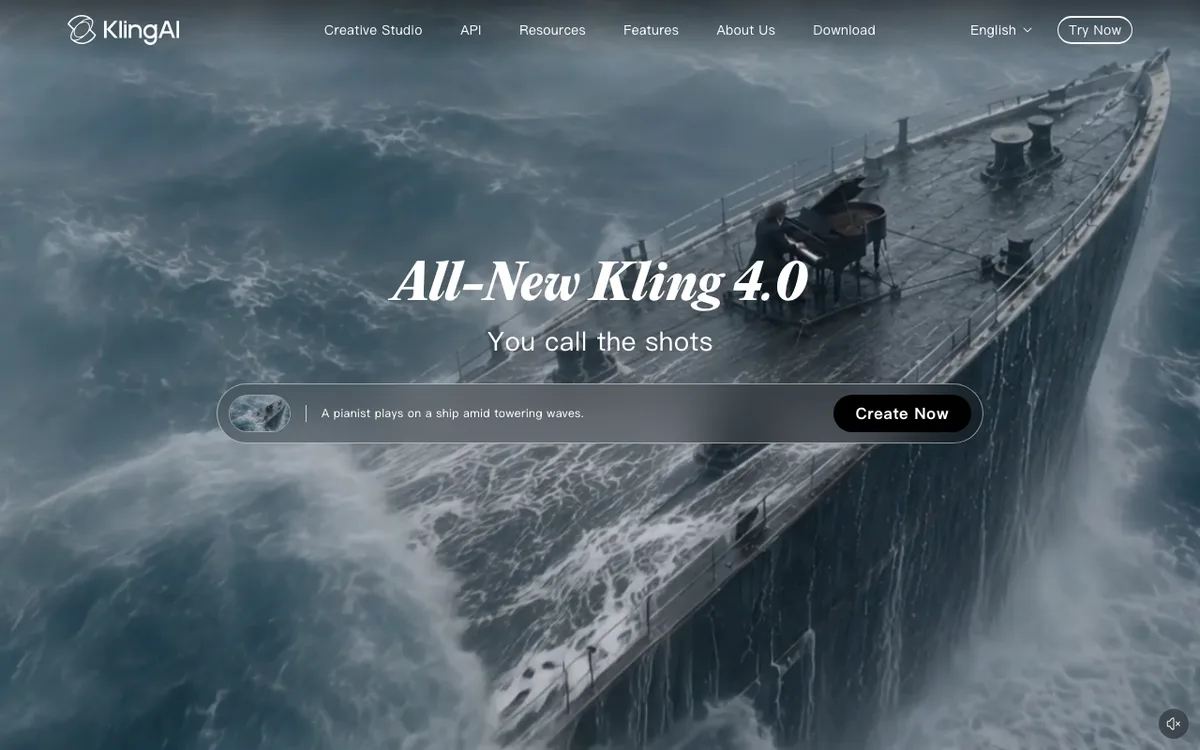 Kling AI: Kuaishou’s studio, now leading with Kling 4.0.
Kling AI is the Hailuo AI alternative for resolution. Its newest model is Kling 4.0, which Kling pitches on “stable dynamic motions” and an “immersive audio-visual experience.”
Kling 4.0 lives in Kling’s own app. Third-party platforms carry Kling 3.0, which makes 3- to 15-second shots with sound from a prompt or a start and end frame.
On Luma, Kling 3.0 goes all the way to 4K. That’s 147 credits a second, about $0.44, against MiniMax H3’s 2K ceiling.
At 720p with sound it’s 40 credits a second, about $0.12. Luma also lists a Kling Motion Control mode at 45 credits a second at 720p.
Pros
- Kling 4.0 on Kling’s own app, with Kling 3.0 on Luma, Runway and Vidwip
- Up to 4K with Kling 3.0 on Luma, the highest resolution here
- About $0.12 a second at 720p with audio on Luma Plus
- Start and end frames for image to video
Cons
- 15 seconds is Kling 3.0’s longest generation, the same as Hailuo 3
- Kling’s own plan prices sit behind a sign-in, so we couldn’t check them
- 4K costs more than three times the 720p rate
Best for: Close-ups and wide shots where resolution decides whether the take holds.
Pricing: Kling’s own plans: see kling.ai (not visible signed out, October 2026). On Luma Plus, Kling 3.0 costs 40 credits a second at 720p with audio, 49 at 1080p and 147 at 4K. Runway includes Kling 3.0 from its $15 Standard plan.
For a deeper look at Kling’s own rivals, see our Kling AI alternatives comparison.
3. Seedance 2.5
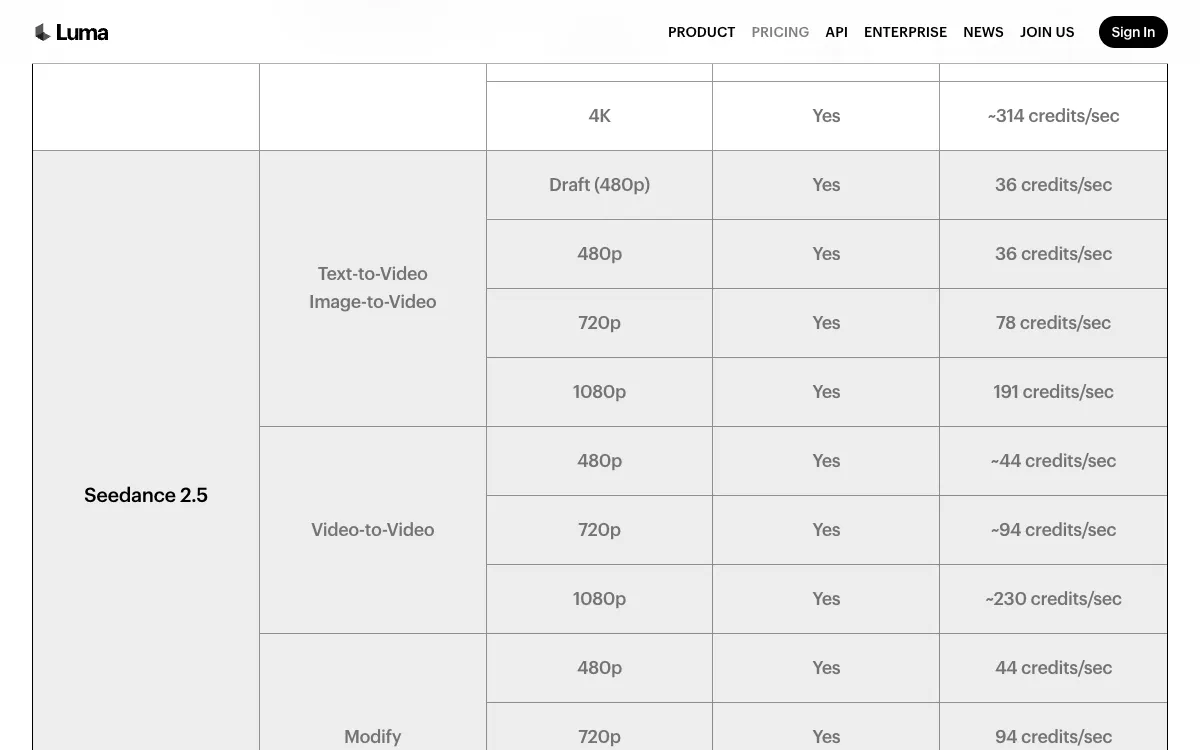 Luma’s price list: Seedance 2.5 with sound at every resolution, priced per second.
ByteDance’s Seedance 2.5 is the pick for faces that have to stay the same from shot to shot. One generation runs 4 to 30 seconds with sound, twice Hailuo 3’s ceiling.
It takes more direction than any model here. Through ByteDance’s API it accepts up to 30 reference images, 10 reference videos and 10 reference audio clips, or a start and end frame instead.
That’s how you hold a character’s face, a product or a voice steady across a sequence. Hailuo 3 takes up to 12 reference images on its own create page.
You reach Seedance through a platform. Luma charges 78 credits a second at 720p, about $0.23, and 191 at 1080p, about $0.57.
Pros
- 4 to 30 seconds per generation, tied with Wan 3.0 for the longest here
- Image, video and audio references to hold a subject steady
- Sound at every resolution on Luma’s price list
- Carried by Luma, Runway and Vidwip, so you aren’t tied to one subscription
Cons
- No direct plan in this list; you pay through a platform
- 1080p costs about $0.57 a second on Luma Plus
- Tops out at 1080p, below Hailuo 3’s 2K
Best for: Multi-shot sequences that need the same face or product in every shot.
Pricing: Luma Plus, $30/month for 10,000 credits: 78 credits a second at 720p, 191 at 1080p (lumalabs.ai/pricing). Runway lists Seedance 2.5 on its Pro ($35/month) and Max ($95/month) plans (runway.com/pricing). Both checked October 2026.
4. Google Veo 3.1
 Google Flow: Google’s own studio for Veo 3.1, free to try with 50 daily credits.
Google Veo 3.1 is the physics pick among Hailuo AI alternatives. Google says it “excels in physics, realism and prompt adherence,” and it generates native audio with the picture.
That’s the gap Hailuo 2.3 leaves open. Hailuo 2.3 is silent, while Veo makes the sound in the same pass, and two people talking come back lip-synced.
The catch is length. Veo 3.1 makes 4, 6 or 8 seconds per generation, and Flow’s Video Extension and Scenebuilder chain them into a longer scene.
For image to video, Flow has Frames to Video and Ingredients to Video. Its free tier includes Veo 3.1 with 50 daily credits, so you can test your hardest physics shot before you pay.
Pros
- Google positions it on physics, realism and prompt adherence
- Native audio, including lip-synced speech, generated with the picture
- Frames to Video and Ingredients to Video in Flow
- Free to try in Google Flow with 50 daily credits
Cons
- 8 seconds is the longest single generation
- The priciest model here: about $0.84 a second with audio on Luma Plus
- Flow’s features vary by Google AI plan, platform and region
Best for: Physics-heavy shots and on-camera dialogue, where realism decides the take.
Pricing: Google Flow: free with 50 daily credits. Google AI Plus: $4.99/month adds 200 monthly Flow credits. Google AI Pro: $19.99/month adds 1,000. Google AI Ultra: from $99.99/month adds 10,000 (flow.google, checked October 2026). On Luma Plus, Veo 3.1 costs 280 credits a second with audio, 140 without.
More on Veo’s own rivals in our Google Veo alternatives guide.
5. Wan 3.0
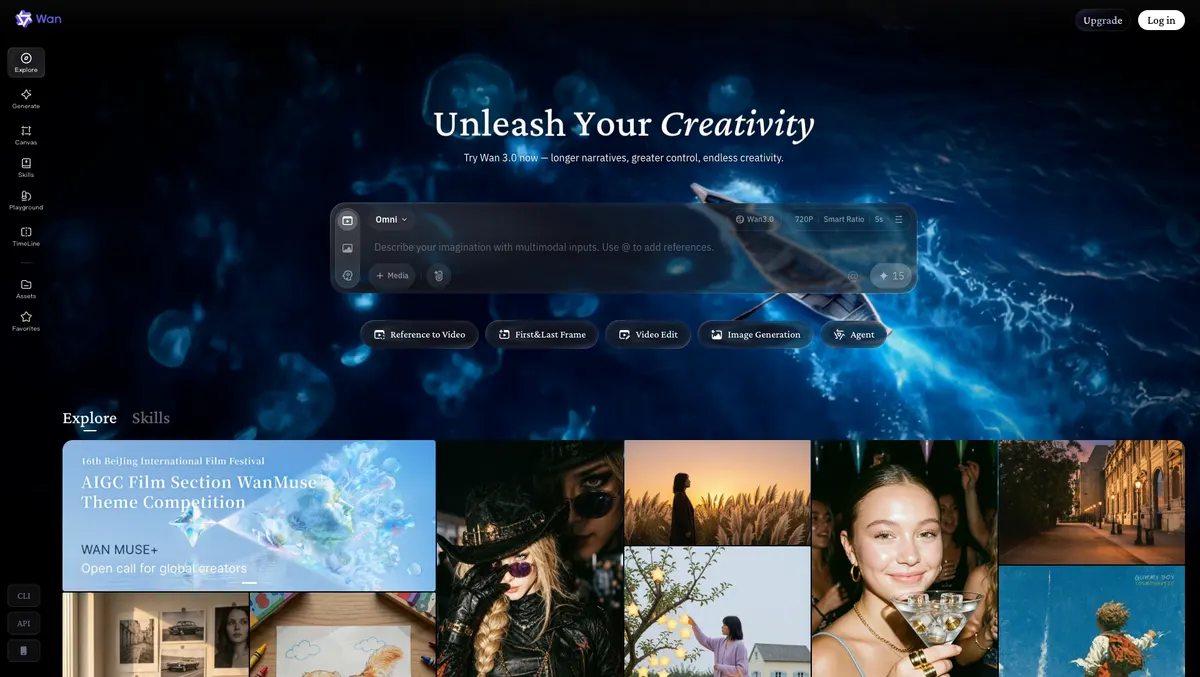 Wan: Alibaba’s own studio for Wan 3.0, quoting 15 credits for a 5-second 720p shot.
Alibaba’s Wan 3.0 is the cheapest Hailuo AI alternative. It runs 2 to 30 seconds a generation with sound, and Wan’s create page quotes 15 credits for a 5-second 720p shot.
On the Pro plan, that’s about $0.10 a second at the $10 monthly price. Billed yearly at $5 a month, it drops to about $0.05.
Pro is where Wan gets useful. It adds 1080p, 10- to 30-second videos, watermark-free downloads and three videos in parallel.
For image to video, Wan’s studio has First & Last Frame and Reference to Video modes. Video Edit reworks a clip you already have.
Pros
- The lowest cost per second here: about $0.05 to $0.10 at 720p
- 2 to 30 seconds a generation
- First & Last Frame and Reference to Video modes
- Watermark-free downloads and 1080p from the Pro plan
Cons
- The free plan runs one video at a time, and 10- to 30-second videos start on Pro
- A Wan subscription covers create.wan.video only; API use is a separate purchase
- 1080p is the ceiling, below Hailuo 3’s 2K
Best for: High-volume drafts and long takes where cost per second matters more than resolution.
Pricing: Free: $0 with daily check-in credits. Pro: $10/month, or $5/month billed yearly, for 300 credits. Premium: $40/month, or $20/month billed yearly, for 1,200 credits (create.wan.video/pricing, checked October 2026).
6. Runway
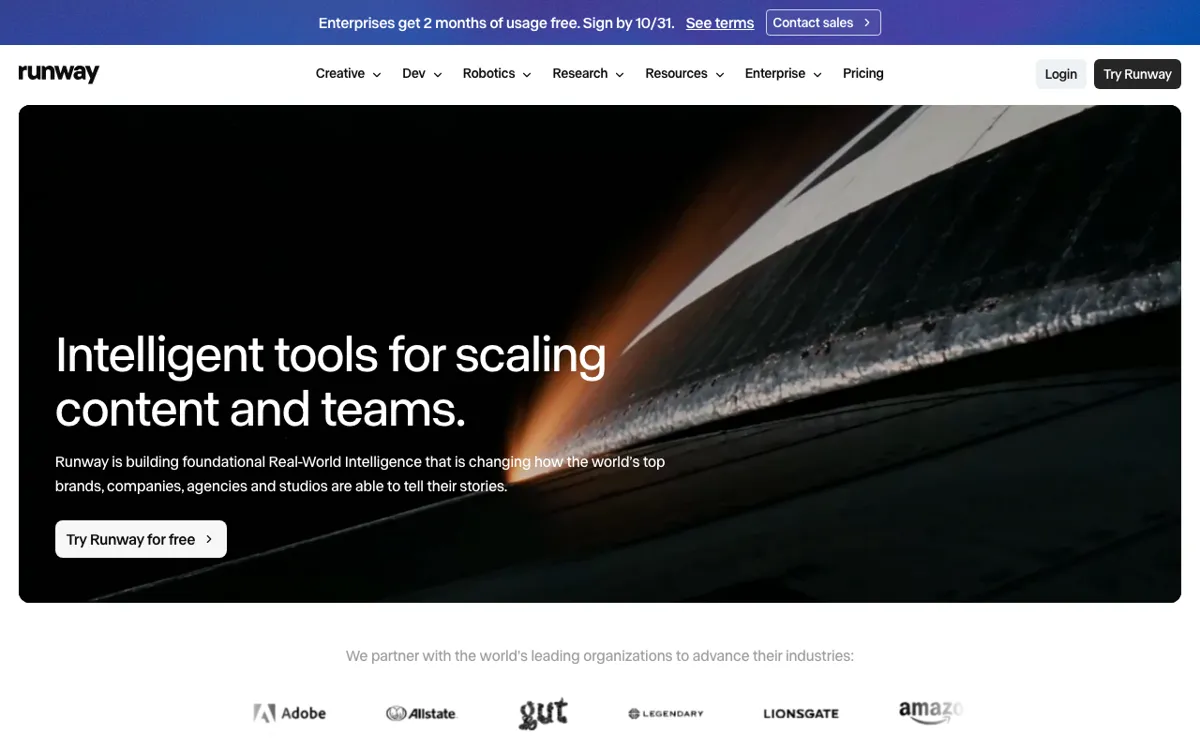 Runway: Gen-4.5 beside Kling 3.0 and Seedance 2.5, with 4K upscaling on paid plans.
Runway is built for teams who want one editor and several models. Its own Gen-4.5 sits beside Kling 3.0 from the Standard plan, and Seedance 2.5 on Pro and Max.
Runway states its credits in seconds, which keeps the math honest. Gen-4.5 costs 12 credits a second, so Standard’s 625 credits buy about 52 seconds, roughly $0.29 a second.
Pro’s 2,250 credits buy about 187 seconds, roughly $0.19 a second. Paid plans add 4K upscaling and 5 to 20 parallel generations.
Runway’s pricing page names neither Hailuo nor Veo. If you want to keep MiniMax’s model in the mix, look at Vidwip or Luma instead.
Pros
- Gen-4.5, Kling 3.0 and Seedance 2.5 under one Runway plan
- Credits stated in seconds of Gen-4.5, so the cost is clear up front
- 4K upscaling on paid plans, unlimited from Pro
- 5 to 20 parallel generations, by plan
Cons
- About 52 seconds of Gen-4.5 a month on Standard doesn’t go far
- The free tier is 125 one-time credits, not a monthly grant
- Hailuo and Veo aren’t named on the pricing page
Best for: Teams who want Runway’s own model and Kling on one bill, with upscaling built in.
Pricing: Free: 125 one-time credits. Standard: $15/month ($12 billed yearly) for 625 credits. Pro: $35/month ($28 yearly) for 2,250 credits. Max: $95/month ($76 yearly) for 9,500 credits (runway.com/pricing, checked October 2026).
Our Runway alternatives post ranks the other side of this trade.
7. Luma Dream Machine
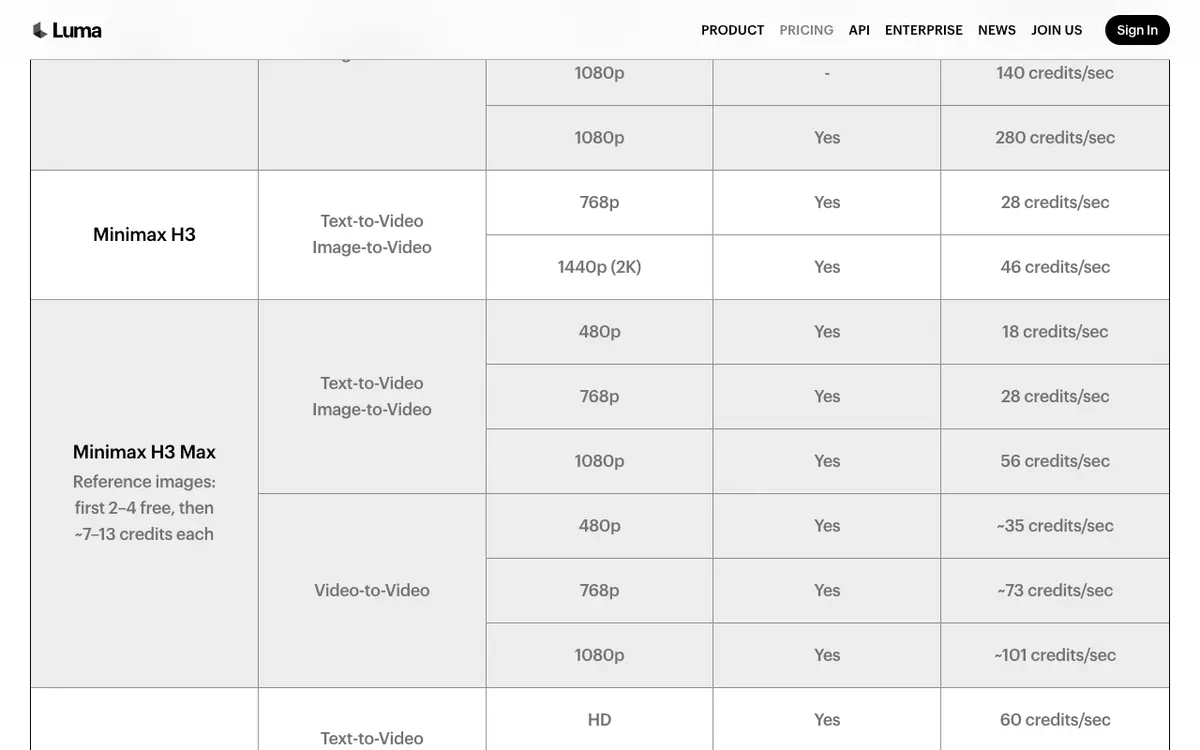 Luma’s price list: MiniMax H3 and H3 Max priced per second, beside Kling, Veo and Seedance.
Luma Dream Machine is the Hailuo AI alternative with the clearest price list. Its picker runs Luma’s own Ray3.2 and Ray3.14 beside Kling 3.0, Veo 3.1, Seedance 2.5 and MiniMax’s own H3 and H3 Max.
So Luma, like Vidwip, lets you keep Hailuo while you test its rivals. MiniMax H3 is 28 credits a second at 768p and 46 at 2K, about $0.08 and $0.14 on Plus.
Every model has a published per-second rate. That makes Luma the easiest place to price a Hailuo shot against Kling, Veo or Seedance before you generate.
Luma’s Ray3.14 is the cheap draft option. It costs 20 credits a second at 720p, about $0.06, with no audio listed.
Pros
- MiniMax H3 and H3 Max beside Kling 3.0, Veo 3.1, Seedance 2.5 and Luma’s Ray models
- A public per-second price for every model, with and without audio
- Ray3.14 drafts at about $0.06 a second at 720p
- Commercial use from the Plus plan
Cons
- The cheapest plan is $30 a month
- Veo 3.1 with audio uses up Plus’s 10,000 credits in under 36 seconds of footage
- Ray3.14 has no audio option on the price list
Best for: Pricing a Hailuo shot against other models from one account with a public rate card.
Pricing: Plus: $30/month ($25 billed yearly) for 10,000 credits. Pro: $90/month ($75 yearly) for 40,000 credits. Ultra: $300/month ($250 yearly) for 150,000 credits (lumalabs.ai/pricing, checked October 2026).
Hailuo AI alternatives compared
| Tool | Best for | Longest shot | Top resolution | Cost per second | Entry price |
|---|---|---|---|---|---|
| Hailuo 3 / MiniMax H3 (baseline) | Faces in 2K | 15 s | 2K | ~$0.14 at 2K (Luma Plus) | From $9.99/mo |
| Vidwip AI Video Generator | A/B one prompt across 16 models, Hailuo included | 30 s (Seedance 2.5, Wan 3.0) | 720p to 2K per model; exports at 1080p | Shown per shot before you generate | Starter $25/mo |
| Kling AI (Kling 3.0) | 4K and motion control | 15 s | 4K (Luma) | ~$0.12 at 720p with audio, ~$0.44 at 4K (Luma Plus) | Runway Standard $15/mo |
| Seedance 2.5 | Faces held across shots | 30 s | 1080p | ~$0.23 at 720p, ~$0.57 at 1080p (Luma Plus) | Luma Plus $30/mo |
| Google Veo 3.1 | Physics and dialogue | 8 s | 1080p | ~$0.84 with audio, ~$0.42 without (Luma Plus) | Free in Flow; AI Plus $4.99/mo |
| Wan 3.0 | Lowest cost, long takes | 30 s | 1080p (Pro) | ~$0.10 at 720p, ~$0.05 billed yearly (Wan Pro) | Wan Pro $5/mo yearly |
| Runway (Gen-4.5) | One editor, several models | Not listed | 4K upscaling | ~$0.29 Standard, ~$0.19 Pro | $15/mo |
| Luma Dream Machine | Public rate card, Hailuo included | Per model | Per model, up to 4K | ~$0.06 (Ray3.14) to ~$0.84 (Veo 3.1) | $30/mo |
Cost per second is the plan’s monthly price divided by its credits, times the model’s published rate. Shot lengths are per generation.
How to choose the right Hailuo AI alternative
You’re not sure Hailuo is the problem. Run the same prompt on Hailuo 2.3, Veo 3.1 and Kling 3.0 Pro in Vidwip AI Video Generator and keep the best take. Luma lets you do the same with MiniMax H3 at a public per-second rate.
Your shot is all physics. Pours, falls and collisions go to Veo 3.1 first, and it adds the sound. Test it free in Google Flow.
A face has to carry the shot. Seedance 2.5 if the face must match across several shots, Kling 3.0 if it needs 4K detail. Hailuo 3 still renders 2K with up to 12 reference images, so keep it in the test.
You’re animating stills. Pick a model that takes a start and an end frame, so the shot lands where you need it. In Vidwip that’s 12 of the 16 models; in Wan it’s the First & Last Frame mode.
You need long takes or volume. Wan 3.0 is the cheapest per second and reaches 30 seconds. Seedance 2.5 matches the length with more references.
You want a finished video, not a folder of clips. In Vidwip every shot lands on the AI Studio timeline, where you cut it and add an AI voiceover. If you came here from OpenAI’s model, our Sora alternatives list covers the same field from that side.
Final verdict
Hailuo is still a strong model for physics and faces. The case for an alternative is specific: sound on physics shots, takes past 15 seconds, 4K, lip-synced dialogue or a cheaper second of footage, and a different model wins each one.
Veo 3.1 leads on physics with sound, Kling 3.0 on resolution, Seedance 2.5 on faces held across shots, and Wan 3.0 on price. Runway and Luma bundle several of them on one plan.
If you’d rather not bet every shot on one model, run them side by side. Start at app.vidwip.com, on plans from $25 a month, with Hailuo 3, Hailuo 2.3, Kling 3.0 Pro and Veo 3.1 in the same picker.